
Decreasing salt does not imply consuming bland meals. A heart specialist explains the straightforward, flavorful swaps that may defend your coronary heart and assist management your blood strain.
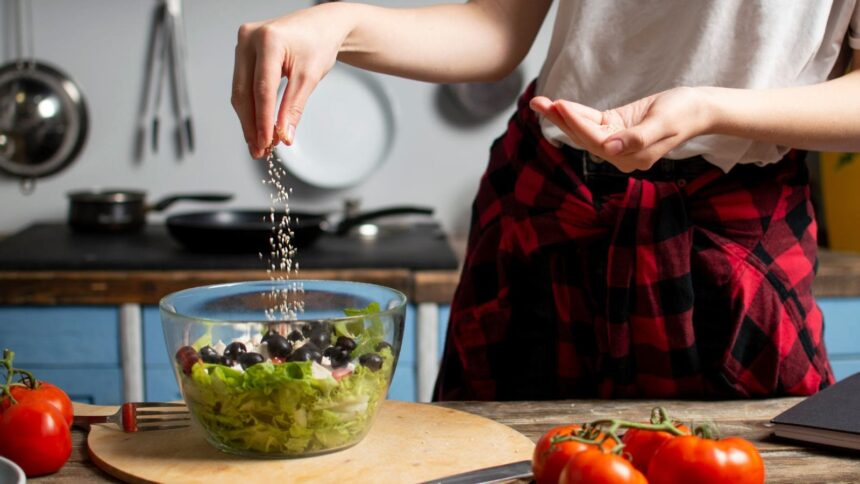
Salt is a necessary a part of on a regular basis cooking. Immediately improve taste from dals to subzis, pickles to snacks. However whereas an excessive amount of salt might make your meals style higher, it could actually secretly hurt your coronary heart. Many individuals do not understand that an excessive amount of sodium is strongly related to hypertension, coronary heart illness, stroke, and even kidney injury. In line with the World Well being Group (WHO), salt consumption for adults must be lower than 5 grams per day. Nevertheless, the typical Indian consumes near 8-10 grams each day, which is sort of double the advisable quantity.
Dr Priya Palimkar, Senior Advisor Cardiology at Sahyadri Tremendous Specialty Hospital, tells Healthshots that decreasing salt consumption is without doubt one of the easiest but strongest methods to guard your coronary heart well being.
Why decreasing salt consumption is vital for coronary heart well being
An excessive amount of sodium causes your physique to retain water. This will increase blood quantity and places additional strain on the artery partitions, inflicting hypertension. This fixed strain damages blood vessels over time, rising your danger of coronary heart assault and stroke.
A research printed within the journal Vitamins discovered that top sodium consumption will increase the chance of hypertension, whereas decreasing salt consumption considerably lowers blood strain ranges. In line with the WHO, sodium-related well being issues trigger roughly 1.89 million deaths worldwide every year.
Dr. Palimkar explains that these results are interconnected, and hypertension not solely impacts the guts, but additionally the mind and kidneys.
taste meals with out salt
1. Use herbs and spices
Contemporary herbs like coriander, mint, basil, curry leaves, rosemary, and thyme immediately enliven dishes with out including salt. Spices like turmeric, cumin, black pepper, cinnamon, and cloves not solely improve taste but additionally have anti-inflammatory properties. Many herbs and spices comprise antioxidants that help blood vessel well being. Over time, your style buds will alter and you could not need the additional salt.
2. Provides pure acidity to scale back salt cravings
Elements like lemon juice, kokum, tamarind, vinegar, and uncooked mango stimulate the style buds and make meals really feel flavorful even when it is low in salt. The tangy component naturally balances the dish and reduces the necessity for added sodium. This sensory trick works surprisingly effectively, particularly in Indian delicacies, the place sourness is already frequent.
3. Add depth with aromas equivalent to garlic and ginger
Garlic, ginger, and onions are the bottom of many conventional recipes. Analysis exhibits that garlic, when consumed repeatedly as a part of a balanced food plan, might assist decrease blood strain and LDL (unhealthy) levels of cholesterol. Dr. Palimkar says that whereas these substances will not “filter blocked arteries,” they could enhance cardiovascular danger markers over time.

4. Eat wholesome fat carefully
Chilly-pressed oils equivalent to olive oil, mustard oil, and peanut oil can enhance texture and make a low-salt food plan extra satisfying. Nuts and seeds, equivalent to walnuts and flaxseeds, present heart-healthy omega-3 fatty acids. Utilized in the precise quantities, these wholesome fat can add taste and provide help to really feel full with out resorting to extra salt.
5. Change not solely the substances but additionally the cooking technique.
Roasting, grilling, sluggish cooking, and sautéing improve the pure flavors of meals. These strategies create sweetness and depth and cut back the necessity for added salt. When you persistently cut back salt, your style buds will start to understand meals which might be much less salty.
As Dr. Palimkar emphasizes, decreasing salt does not imply sacrificing style. It is about making smarter taste selections that defend your coronary heart.