
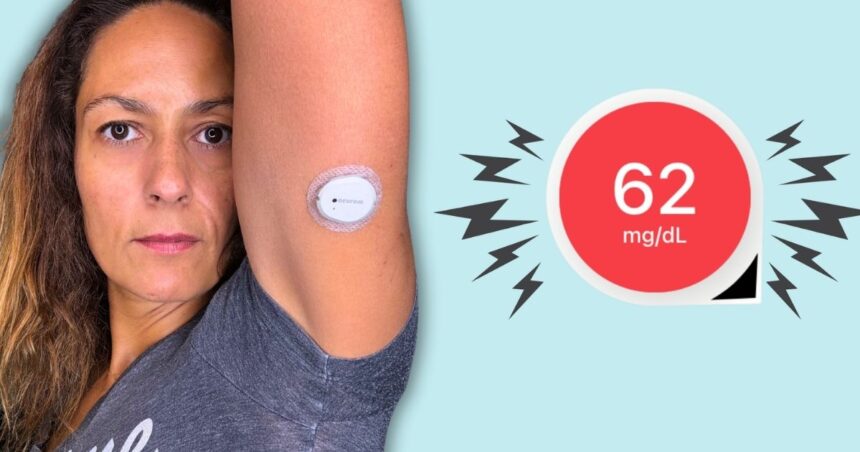
In case you have diabetes and put on a steady glucose monitor (CGM), you have most likely skilled that mysterious 3 a.m. alarm.
It is not 1 a.m. or 5 a.m., it is all the time inside three “oh somethings.” If you go to mattress with lovely and steady blood sugar ranges, beepthe night time all of a sudden modifications.
So what’s actually occurring at the moment of the night time? Is it your CGM, your hormones, your final meal, or is the diabetic god merely having fun with our sleep deprivation?
Let’s break down the whole lot that causes these 3am alerts, easy methods to inform the distinction between an actual alarm and a false alarm, and what you are able to do to lastly get uninterrupted sleep.
Watch the video or learn the article under.
What’s actually occurring at 3am?
1. The daybreak phenomenon: Hormones get up earlier than you do.
Between 2am and 4am, your physique begins making ready for the following day. This is called the daybreak phenomenon.
Throughout this era, hormones equivalent to cortisol, progress hormone, and glucagon instruct the liver to launch glucose in order that the physique has vitality to get up.
Individuals with out diabetes launch insulin to steadiness the elevated secretion of insulin, however individuals with diabetes usually do not time their insulin correctly.
consequence? Blood sugar begins to rise, the CGM detects it, and the three a.m. live performance begins.
Indicators of the daybreak phenomenon:
- Blood sugar ranges rise steadily between 2 and 4 a.m.
- It occurs persistently even on days once I eat early and do not train till late.
- The rise seems to be easy relatively than abrupt.
Calibration trace (for CGMs that permit it)
- By no means calibrate throughout speedy modifications in glucose.
- At all times calibrate when blood sugar ranges are flat and steady.
- This prevents inaccurate readings from lasting for hours.
2. Night time snacks (particularly high-fat meals)
Pizza, hamburgers, ice cream, potato chips, and even wholesome fat like nuts and avocados are digested slowly and may delay the rise in blood sugar ranges.
Even for those who go to mattress at 110 mg/dL, by 3 a.m. that slow-release vitality has lastly reached your bloodstream.
Mix this with insulin doses that weren’t completely matched and CGM has so much to complain about.
3. Basal insulin timing and pump settings
Timing is vital when utilizing long-acting insulin (also called basal insulin).
Many basal insulins, together with Lantus and Tresiba, have delicate peaks. You could expertise your lowest temperatures round 3 a.m., as your physique’s peak happens concurrently your physique’s pure decline through the night time.
Then again, if:
- Inadequate consumption of insulin throughout dinner
- I lowered my basal dose an excessive amount of.
- skipped repair
As a substitute, you might even see a sluggish and regular rise.
4. Night coaching
Train, particularly resistance coaching or cardio train close to bedtime, can change nighttime blood sugar patterns.
Throughout restoration, your muscle mass proceed to take away glucose out of your bloodstream for hours.
This could trigger points equivalent to:
- Sluggish and regular decline in a single day
- Improve nighttime alarms on train days
- Larger variability relying on depth and timing
Here is what I personally do on intense coaching days:
- Make small changes to long-acting insulin
- Purpose to go to mattress nearer to 140 mg/dL than 100 mg/dL
- Observe how completely different exercises have an effect on your night time (I exploit Diabetes Logbook)
Train is nice for controlling blood sugar ranges and needs to be a part of your day by day routine, however it helps to plan for nighttime results.
5. Compression decreases: when rolling over the sensor
A quite common reason for nighttime alarms, particularly false lows, is compression.
If you flip over and put strain on the CGM sensor, that strain reduces the move of interstitial fluid and the CGM registers that your blood sugar ranges are plummeting.
If you happen to flip over, the readings will return instantly.
No, I wasn’t about to move out. It simply hugged the CGM a bit of too aggressively.
Learn how to acknowledge compression loss:
- Sudden drop in signs with out signs
- Returns to regular with a pointy bounce when moved
- Pattern arrows do not match your emotions
Fast suggestions: At all times examine the development graph earlier than coping with the lows. No extra over-treating false lows.
6. Sensor quirks, lag occasions, and false readings
Even an ideal sensor can malfunction underneath sure circumstances.
CGM measures glucose in interstitial fluid relatively than blood. Which means readings usually lag 5 to 10 minutes behind real-time modifications, particularly when glucose modifications quickly.
Different components that may trigger false alarms:
- temperature change
- sweating
- Fast modifications in blood sugar ranges
- Older sensors (particularly 10 to 14 days outdated)
- Unfastened sensor adhesive
Learn how to deal with nighttime despair with out leaving your mattress
If the alarm is actual and your blood sugar is admittedly low, you want a fast carb that does not require a visit to the kitchen.
My three bedside factors are:
My bite-free fast repair:
- fruit pouch Excellent for if you really feel like chewing is unimaginable
- skittles It may be simply swallowed with water, so there isn’t a must brush your tooth.
- glucose tab It is the quickest and most predictable choice
15 15 Utilizing guidelines
You could wish to take into account the 15-15 rule when treating hypoglycemia.
- Eat 15g of carbohydrates
- wait quarter-hour
- Reconfirmation
- If nonetheless low repeat
Bonus tip: If you happen to curb your urge for food round 5 a.m., you will usually want lower than 15 g of carbohydrates, as your morning hormones naturally start to lift your blood sugar ranges and improve insulin resistance at the moment. You may see the identical sample.
Monitoring what works for you’ll be able to assist stop a rebound excessive.
Learn how to cut back (or cease) your 3am CGM alarm
Listed below are the methods which have made a very powerful distinction for me and lots of others within the Diabetes Robust neighborhood.
- Rigorously take into account sensor placement – Keep away from areas the place you lie down, particularly the skin of your arms.
- Alter or customise alerts – Use in a single day sleep mode or a gentler threshold if wanted.
- Begin a brand new sensor early within the day – This avoids the instability of the primary day in a single day.
- Take note of dinner timing and insulin dosage – Be particularly cautious with high-fat meals or late meals.
- Observe sample – Write down your blood sugar rises and falls, your meals, your exercises, your primary timing, the whole lot. This helps establish predictable triggers.
- Preserve fast-acting carbohydrates by your bedside – No extra over-correcting or stumbling to the kitchen at 3am.
ultimate ideas
Our CGM would not hate us. They’re making an attempt to guard us however generally they could be a little too loud at 3am
Understanding the patterns behind these alarms will improve your confidence, enhance your sleep, and enhance your nightly blood sugar ranges.
And definitely, diabetes will finally begin to really feel prefer it makes a bit of extra sense.
Candy desires, and fewer beeps.