
A brand new research from Sweden means that older folks with a excessive genetic danger of growing Alzheimer’s illness might keep higher long-term mind well being in the event that they eat a little bit extra meat of their diets.
The researchers centered on older folks with mutations within the APOE4 gene, a gene that will increase the danger of Alzheimer’s illness.
Can meat shield the mind?
The research adopted greater than 2,100 adults aged 60 and older for as much as 15 years. Not one of the members had dementia at first.
They crammed out a meals questionnaire to trace their weight loss program. The researchers then in contrast weight loss program and modifications in members’ cognitive perform and dementia standing over time, whereas controlling for elements resembling age, schooling, and life-style.
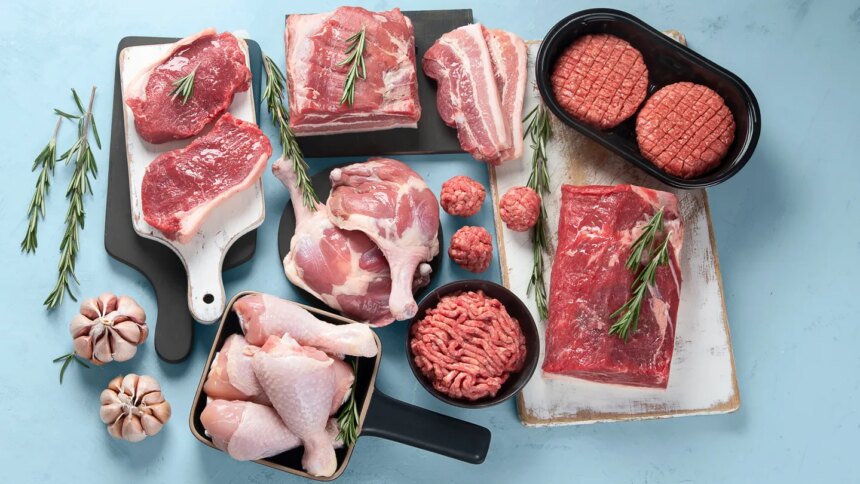
The research categorised crimson meat (beef and pork) and poultry (hen and turkey) as unprocessed merchandise, and recognized deli meats, bacon, and sausage as processed merchandise.
Contributors have been divided into 5 teams based mostly on the full quantity of meat they ate. These with low ranges ate simply over an oz. of meat per day, whereas these with excessive ranges ate about 4.5 ounces of meat per day, or lower than an average-sized hen breast.
“The group that ate essentially the most meat was removed from following a ketogenic or carnivorous weight loss program,” mentioned lead writer Jakob Norgen, Ph.D., a postdoctoral fellow on the Karolinska Institute in Stockholm, Sweden.
The researchers discovered that amongst members who carried one or two copies of the high-risk APOE4 gene, those that ate essentially the most meat didn’t expertise the identical cognitive decline over the 15-year research interval as those that ate the least meat, Dr. Nogen mentioned.
The findings recommend that unprocessed meat might have some brain-protective results in folks at excessive genetic danger.
Nevertheless, individuals who ate essentially the most processed meat had the next danger of dementia, no matter which APOE gene they carried.
Nitrates in processed meat could also be dangerous to the mind
Dr. Hussein Yassin, a professor of neurology and director of the Heart for Customized Mind Well being on the Keck Faculty of Medication of the College of Southern California in Los Angeles, mentioned the findings might replicate how processed and unprocessed meats have an effect on the mind.
“Components resembling nitrates in processed crimson meat have detrimental results on the mind, versus unprocessed crimson meat, which is extra nutritious,” says Dr. Yassin, who was not concerned within the research. “This distinction is essential.”
analysis has limits
The research additionally had essential limitations, Yassin mentioned. That is observational, which means that researchers tracked well being outcomes over time in comparison with a management group with none intervention, resembling asking a bunch to take treatment or comply with a sure weight loss program.
The sort of research can not show that consuming extra meat has a particular impact on the mind, solely that there’s an affiliation. There could also be different elements that affect cognition and dementia danger that the researchers weren’t capable of account for.
Yassin additionally famous that the research was based mostly on self-reported meals diaries, which may very well be inaccurate.
How weight loss program interacts with genetic danger
Earlier analysis helps the concept weight loss program and genetics work together, mentioned Dr. Michael Lutz, a professor of neurology at Duke College Faculty of Medication in Durham, North Carolina, who was not concerned within the research.
However the brand new research is inconsistent with a lot of the earlier analysis on weight loss program and dementia danger, Dr. Lutz says.
One doable rationalization for the newest findings might should do with coronary heart well being, Lutz mentioned. A Swedish research discovered that elevated meat consumption was related to decrease levels of cholesterol and a decrease ratio of saturated to polyunsaturated fat, and these elements are carefully related to improved mind well being.
How genes form Alzheimer’s illness danger
Roughly 50% of the inhabitants has two copies of APOE3, which is related to common Alzheimer’s illness danger.
25-30% of individuals have not less than one copy of APOE4. These with one copy face three to 4 occasions the danger. Individuals with two copies of APOE3 develop Alzheimer’s illness greater than 10 occasions as usually as folks with two copies of APOE3.
Nonetheless, most adults with one copy of APOE4 are by no means finally identified with Alzheimer’s illness.
“Genetic predisposition is a relative danger, not a definitive prognosis of growing Alzheimer’s illness signs at a sure age,” Lutz says.
Professional recommendation to decrease your danger of Alzheimer’s illness
Wholesome habits that may assist delay the onset of Alzheimer’s illness are comparable no matter genetic danger, however adopting them early in life could also be particularly essential for folks with extra danger elements, together with APOE4 variants, Lutz says.
He suggests the next evidence-based methods:
- Handle your coronary heart by managing your blood stress and ldl cholesterol
- Transfer your physique recurrently.
- Keep socially and cognitively lively.
Lutz recommends (and practices) the MIND weight loss program, which analysis has linked to slowing cognitive decline. This weight loss program focuses on:
- Inexperienced and yellow greens and different greens
- berries
- complete grain
- fish and poultry
- nuts and olive oil
Pink meat, butter, cheese, sweets, fried meals and quick meals are additionally restricted.